
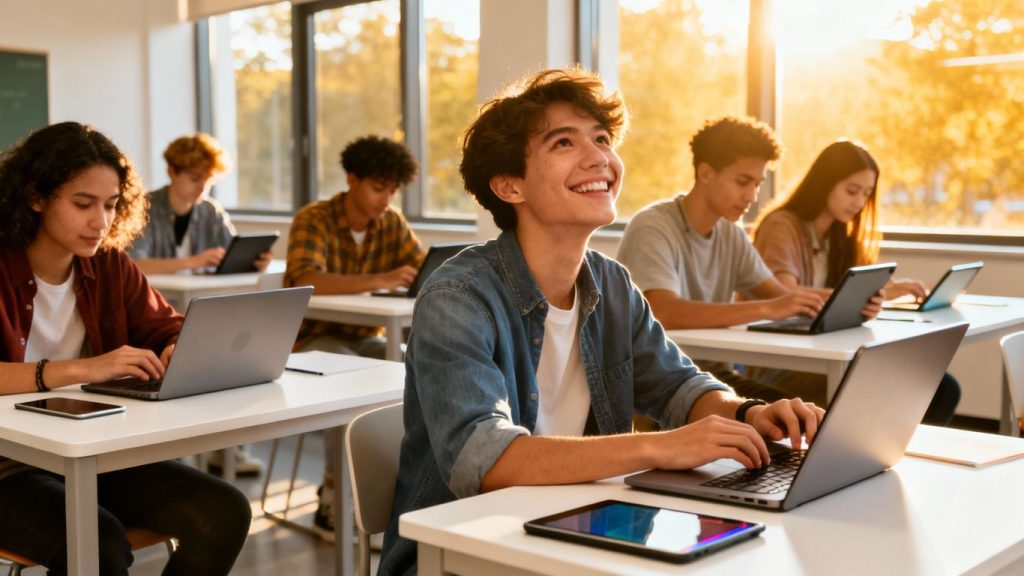
In today’s schools, technology is becoming a regular part of how students learn. It’s not just about having computers; it’s about using them in ways that really help students. This article looks at the 10 advantages of technology for students in the classroom, showing how it can make learning better for everyone.
Key Takeaways
- Technology allows for learning that is made just for each student, matching their pace and needs.
- Digital tools make lessons more interesting and hands-on, like virtual trips or interactive games.
- Students can find information on almost any topic online, going beyond just textbooks.
- Using tech in school helps students get ready for jobs that need computer skills.
- Technology can help students work together and communicate better, both in class and online.
1. Personalized Learning
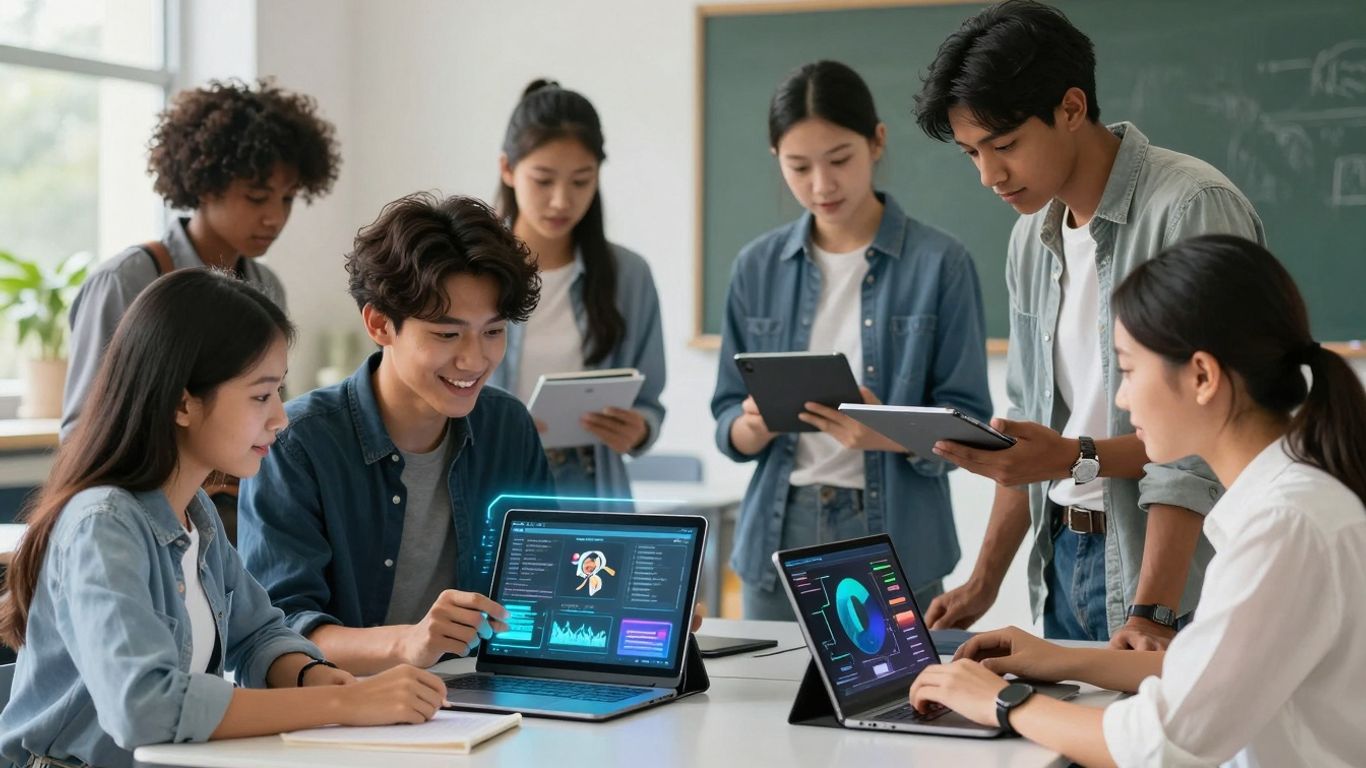
Gone are the days when every student had to learn the exact same thing at the exact same pace. Technology in the classroom now makes it possible to tailor the learning experience to each individual student. Think about it: some students grasp concepts quickly, while others need a bit more time or a different approach. Adaptive learning software can adjust the difficulty of tasks in real-time, offering extra support where needed or providing more challenging material for those ready for it.
This means students aren’t held back if they’re ahead, nor are they left behind if they’re struggling. They can work through material at a speed that makes sense for them. Teachers can also use digital tools to assign specific activities or resources based on a student’s particular strengths or areas that need more attention. It’s about meeting students where they are.
Here’s how technology helps make learning personal:
- Adaptive software: Adjusts content difficulty and pace based on student performance.
- Differentiated assignments: Teachers can assign varied tasks through learning platforms.
- Student-led exploration: Allows students to explore topics of interest more deeply.
Technology shifts the focus from a one-size-fits-all model to one that recognizes and responds to the unique learning journey of every student. This student-centered approach can make a big difference in how much they learn and how they feel about learning.
Ultimately, this personalized approach helps ensure that every student has the opportunity to succeed, building confidence and a stronger foundation for future learning.
2. Interactive and Immersive Learning
Gone are the days when learning was confined to static textbooks and passive listening. Technology brings lessons to life, transforming the classroom into a dynamic space where students can actively participate and explore. Think about how much more engaging a history lesson becomes when students can take a virtual tour of ancient Rome or how science concepts click when they can manipulate a 3D model of a molecule on a screen. This hands-on approach makes abstract ideas tangible and memorable.
Tools like interactive whiteboards, educational apps, and even simple online quizzes turn learning into an experience. Students aren’t just receiving information; they’re interacting with it. This can involve:
- Using simulations to understand complex scientific processes.
- Engaging with educational games that reinforce concepts through play.
- Exploring virtual environments that offer a sense of presence and discovery.
These methods cater to different learning styles and can make even challenging subjects more approachable. When students are actively involved, their attention is captured, and the material sticks better. It’s a shift from simply reading about something to actually experiencing it, even if that experience is digital. This kind of engagement can really help students grasp difficult topics and retain what they learn for longer periods. It’s a great way to make learning feel less like a chore and more like an adventure, helping them build a stronger foundation for future learning, much like how understanding personal finance can help you grow your money low-cost investment strategies.
The shift towards interactive learning means students are no longer just spectators in their education. They become active participants, building knowledge through doing, exploring, and experimenting. This active involvement is key to deeper comprehension and sustained interest.
3. Unlimited Educational Resources
Remember when learning meant dusty encyclopedias and the school library? Technology has completely changed that. Now, students have access to a universe of information right at their fingertips. Think digital libraries filled with e-books, vast databases of articles, and even lectures from experts around the globe. It’s like having the world’s biggest library and research center open 24/7.
This means learning isn’t confined to a textbook anymore. Students can explore topics that genuinely interest them, going way beyond the standard curriculum. Whether it’s a deep dive into ancient history or the latest advancements in science, the resources are there. This accessibility helps students discover new passions and develop a more rounded understanding of the world.
- Digital Libraries: Access to countless e-books and academic journals.
- Online Databases: Vast repositories of research papers and articles.
- Multimedia Content: Videos, simulations, and interactive modules that explain complex ideas.
- Global Experts: Lectures and insights from leading professionals and academics.
The sheer volume of available information means students can find multiple perspectives on any given topic, encouraging critical thinking and independent research skills. It truly democratizes access to knowledge.
This expanded access is particularly helpful for students who might not have extensive resources at home. With reliable internet and devices, they can tap into the same high-quality materials as their peers, helping to level the playing field. It’s about making sure every student has the chance to learn and grow, no matter their circumstances. You can find some great resources for cloud security that can help protect these digital learning environments.
4. Developing Future-Ready Tech Skills
In today’s world, being comfortable with technology isn’t just a bonus; it’s a necessity. Classrooms that integrate technology are actively preparing students for what comes next, both in their careers and in their daily lives. Think about it: many jobs today didn’t even exist a decade ago, and that trend is only going to continue. By using various digital tools, students get hands-on experience with the kinds of software and hardware they’ll encounter in the professional world.
This exposure goes beyond just knowing how to use a computer. It involves learning practical skills like:
- Coding and computational thinking: Understanding how to break down problems and create instructions for machines.
- Digital design and creation: Using software to design graphics, build models, or even create simple animations.
- Data analysis: Learning to interpret information and draw conclusions from it.
- Digital citizenship: Understanding how to behave responsibly and safely online.
These are the building blocks for success in a rapidly evolving digital landscape. When students learn to code, use design apps, or even work with smartboards, they’re not just completing an assignment; they’re building a toolkit for the future. This kind of applied learning can really spark interest in fields like engineering or software development, giving them a head start. For instance, students might collaborate on a project using shared documents, much like they would in a professional setting, or experiment with tools that allow for creative design.
Learning to use technology effectively in school means students are better equipped to adapt to new tools and platforms as they emerge. It builds a foundation of digital literacy that supports lifelong learning and career adaptability.
This isn’t about replacing traditional learning but about augmenting it. It’s about making sure that when students leave the classroom, they have the confidence and the practical abilities to thrive in a world that’s increasingly driven by technology.
5. Promotes Collaboration
Technology really changes how students can work together. It’s not just about sitting next to each other anymore. Online tools let students share documents, work on projects at the same time, and give each other feedback, no matter where they are. Think about group presentations or research papers – these can now be built collaboratively by multiple students, even if they can’t meet in person.
Digital platforms can connect students who might not normally interact. This opens up discussions and allows for different viewpoints to be shared more easily. It helps build a sense of community within the classroom, making everyone feel more included.
Here are a few ways technology helps students collaborate:
- Shared digital workspaces: Tools like Google Docs or Microsoft 365 allow multiple students to edit a single document simultaneously, seeing each other’s changes in real-time.
- Online discussion forums: These provide a space for students to ask questions, share ideas, and help each other understand complex topics outside of class time.
- Video conferencing tools: Platforms like Zoom or Skype enable virtual group meetings, allowing students to brainstorm, plan, and present together, bridging geographical gaps.
This ability to connect and build together digitally is a key part of preparing students for future work environments.
Working together online teaches students how to communicate effectively in a digital space, manage shared tasks, and respect different contributions. These are skills that are really important for almost any job they’ll have later on.
6. Improves Engagement and Motivation
When learning materials are presented in ways that capture attention, students tend to pay more attention and feel more interested. Technology can make lessons more interesting by using interactive elements, games, and simulations. Instead of just reading about a topic, students can explore it through virtual experiences or solve problems in a digital environment. This active participation can make learning feel less like a chore and more like an adventure.
Think about how games often keep players hooked with challenges and rewards. Educational technology can use similar ideas. For example:
- Points and Badges: Awarding points for completing tasks or earning digital badges for mastering a skill can give students a sense of accomplishment.
- Leaderboards: Friendly competition through leaderboards can encourage students to try harder and improve their performance.
- Immediate Feedback: Getting instant feedback on answers or progress helps students understand where they stand and what they need to work on, keeping them involved.
This approach helps turn passive learners into active participants. When students are actively involved and see their progress, they are more likely to stay motivated and develop a genuine interest in the subject matter. It’s about making the learning process itself rewarding and enjoyable, which naturally boosts their desire to learn more.
7. Enables Accessibility
Technology in the classroom is a game-changer for making sure every student can learn, no matter their challenges. It opens doors that might have been closed with traditional methods. Think about students with visual impairments; screen readers and text-to-speech software can read out lessons, making information available to them. For those who find speaking difficult, speech-to-text tools allow them to participate and express their ideas without struggle.
This technology helps level the playing field, ensuring that learning opportunities are not limited by physical or learning differences. It’s about adapting the learning environment to the student, rather than expecting the student to adapt to a rigid system. This can include specialized keyboards, adaptive mice, or software that adjusts display settings for easier viewing.
Here are some ways technology supports accessibility:
- Assistive Reading Tools: Software that reads text aloud, helping students with dyslexia or visual impairments.
- Speech Recognition: Allows students to dictate their thoughts and assignments, benefiting those with motor difficulties or certain speech impediments.
- Customizable Interfaces: Digital platforms can often be adjusted for font size, color contrast, and layout to suit individual needs.
When assistive technologies are integrated into the everyday classroom, they don’t single students out. Instead, they become normal tools that help everyone access information and participate more fully in learning activities. This approach promotes inclusion and helps build a more supportive community for all learners.
8. Student Data Insights
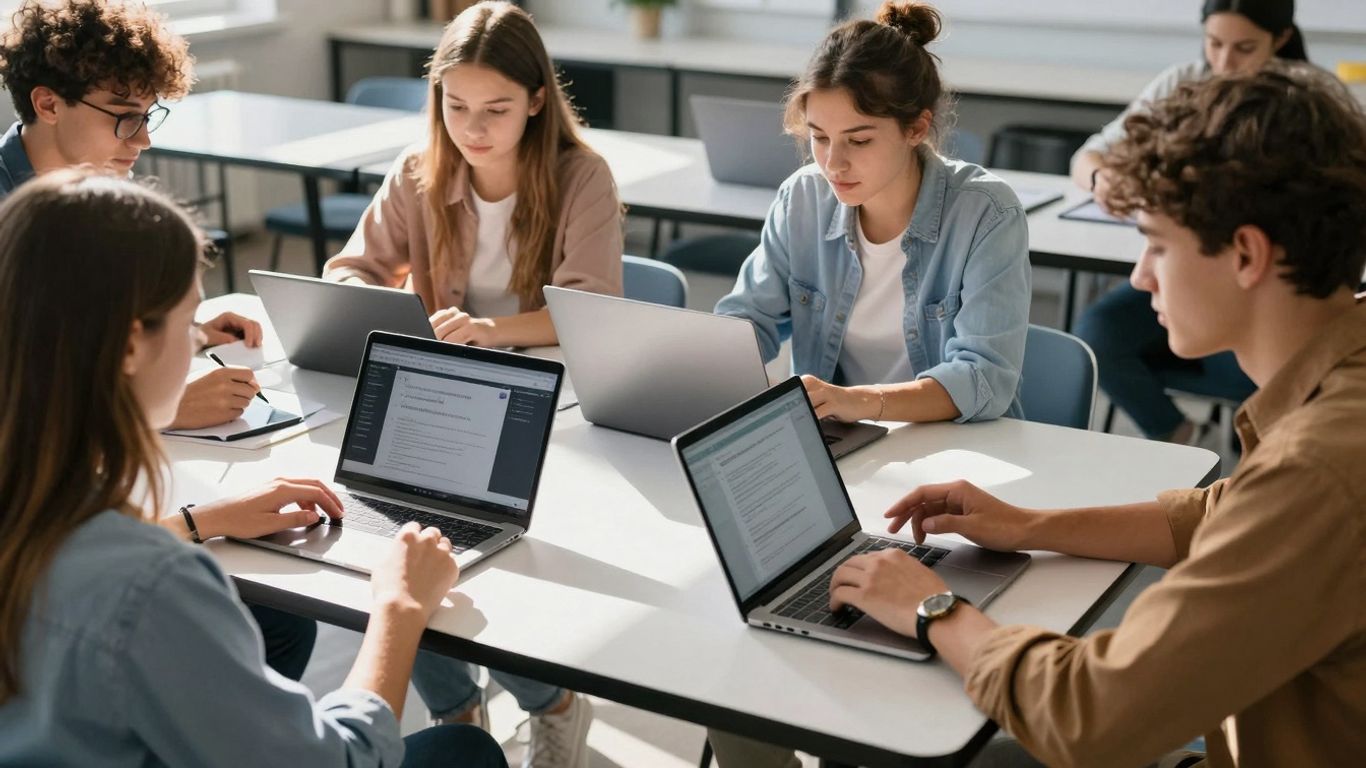
Technology in the classroom generates a lot of information about how students are learning. This data can show teachers what topics students grasp easily and where they might need a little extra help. Think of it like a progress report that’s always updating.
This information comes from various sources:
- Performance on digital assignments and quizzes.
- How often students interact with learning materials.
- Participation in online discussions.
- Usage patterns in educational software.
These insights allow educators to tailor their teaching methods to individual student needs. For example, if a teacher notices several students struggling with a specific math concept through online assessments, they can plan a targeted mini-lesson for that group. This approach helps prevent students from falling behind and supports their academic journey more effectively. It also helps academic leaders in program management and student performance tracking [3b7c].
Using this data thoughtfully means teachers can provide more specific feedback and support. It’s not about tracking every move, but about understanding learning patterns to offer the right kind of help at the right time. This makes learning more efficient for everyone involved.
This kind of data analysis helps teachers:
- Adjust lesson plans based on real-time understanding.
- Identify students who might need one-on-one attention.
- See how well a particular teaching strategy is working.
- Track student growth over the school year.
9. New Teaching Approaches
Technology is really changing how teachers teach, and honestly, it’s for the better. We’re moving beyond just lectures and textbooks. Think about blended learning, where some lessons happen online and others in person – it’s a mix that can really suit different subjects and how students learn. Or the flipped classroom model, where students watch videos at home and then use class time for hands-on activities and discussions. It makes class time more active.
Digital tools also let us assess learning in new ways. Instead of just tests, students can build e-portfolios to show what they know and can do. Online quizzes give immediate feedback, which is super helpful for students to see where they need to focus. This shift allows for more dynamic and student-centered instruction.
Here are a few ways technology opens up new teaching methods:
- Project-Based Learning: Students tackle real-world problems, using tech to research, design, and present solutions.
- Inquiry-Based Learning: Technology provides access to vast information, letting students explore questions and discover answers independently.
- Collaborative Learning: Online platforms make it easy for students to work together on projects, even if they aren’t in the same room.
The integration of technology encourages educators to think creatively about lesson delivery and student assessment. It’s about using tools to make learning more relevant and effective for everyone involved.
10. Prepares for the Digital World
The world outside the classroom is increasingly digital, and schools have a role in getting students ready for it. Simply knowing how to use a computer isn’t enough anymore. Students need to understand how to interact with technology in smart and safe ways.
Think about it: many jobs that exist today didn’t even exist ten years ago. Technology changes fast, and students who are comfortable with new tools and can adapt quickly will have a big advantage. This means learning not just how to operate software, but also how to think critically about the information they find online and how to use digital tools responsibly.
Here are a few ways technology helps prepare students:
- Learning to evaluate online information: Not everything on the internet is true. Students need to learn how to spot reliable sources and understand bias.
- Understanding digital citizenship: This covers everything from online safety and privacy to how to behave respectfully in digital spaces.
- Developing adaptability: By using various digital tools, students become more comfortable with change and learning new systems, which is a key skill for future careers.
The goal isn’t just to make students tech-savvy, but to make them digitally literate. This means they can use technology effectively, understand its impact, and participate confidently in an online society.
By integrating technology thoughtfully, schools can help students build the skills and confidence they need to thrive in a world that’s always connected and constantly evolving. It’s about giving them the tools to not just keep up, but to lead the way in the digital future.
Looking Ahead
As we’ve seen, bringing technology into the classroom offers a lot of good things for students. It helps make learning fit each person better, gives access to tons of information, and gets students ready for jobs in the future. When schools use these tools the right way, they can really make learning more interesting and help every student do their best. It’s about using these tools smartly to help students learn and grow.
Frequently Asked Questions
How does technology make learning more personal for students?
Technology lets students learn in ways that fit them best. Imagine apps that adjust the difficulty of lessons based on how well you’re doing, or teachers giving you specific tasks that match your interests. This means you can learn at your own speed, getting extra help when you need it or moving ahead if you’ve already mastered a topic.
Can technology really make learning more exciting?
Absolutely! Instead of just reading from a book, technology can bring subjects to life. Think about virtual field trips to ancient Rome or using special glasses to see a 3D model of the human heart. These kinds of experiences make learning way more interesting and help you remember things better.
What kind of learning materials can students access with technology?
The internet is like a giant library! Students can find tons of information, videos, and even online courses from experts all over the world. This means you’re not limited to just the books in your classroom; you can explore almost any topic you can imagine.
How does using technology in school help prepare students for the future?
Schools today use many of the same tools you’ll find in the workplace. Learning to use computers, software, and even basic coding or design programs gives you important skills that employers look for. It’s like getting a head start on the skills you’ll need for jobs later on.
Does technology help students work together better?
Yes, it really does! Online tools allow students to share ideas, work on projects together even if they’re not in the same room, and help each other out. It makes group work smoother and can help build a stronger sense of community in the classroom.
How does technology make learning accessible for all students?
Technology offers tools that help students with different needs. For example, software can read text aloud for students who have trouble seeing, or convert spoken words into text for those who find it hard to write. This helps make sure everyone can participate and learn effectively.

Peyman Khosravani is a seasoned expert in blockchain, digital transformation, and emerging technologies, with a strong focus on innovation in finance, business, and marketing. With a robust background in blockchain and decentralized finance (DeFi), Peyman has successfully guided global organizations in refining digital strategies and optimizing data-driven decision-making. His work emphasizes leveraging technology for societal impact, focusing on fairness, justice, and transparency. A passionate advocate for the transformative power of digital tools, Peyman’s expertise spans across helping startups and established businesses navigate digital landscapes, drive growth, and stay ahead of industry trends. His insights into analytics and communication empower companies to effectively connect with customers and harness data to fuel their success in an ever-evolving digital world.










